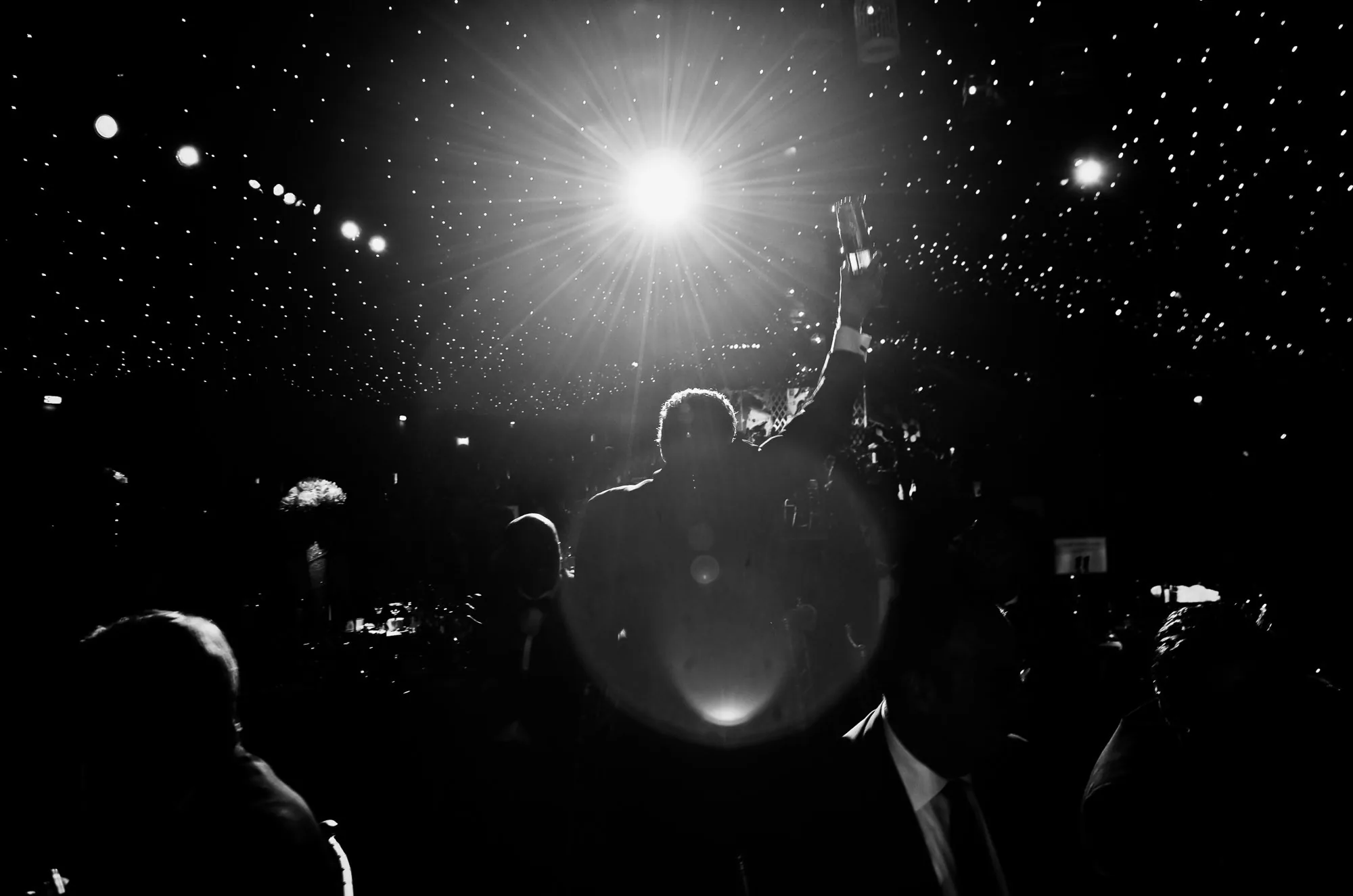
The corporate event photography that works hardest afterward is very rarely the photography that was briefed hardest beforehand. I've covered conferences, awards dinners, exhibitions and panel discussions across Kent and London, and the events that produce the most usable content are almost always the ones where I was told what mattered to the business, not just handed a running order and left to work it out.
What I mean by that is simple. A running order tells me when the keynote starts and when the awards are handed out. It doesn't tell me that the marketing team needs three images that work as LinkedIn posts before the event has even finished, or that a sponsor's branding needs to be visible in at least one usable frame, or that a director would rather not be photographed mid-sentence with an awkward expression, however candid that shot might be. That kind of detail changes where I stand and when I press the shutter, and it's the difference between a gallery that sits in a folder and one that actually gets used.
One-to-one portraits at a conference, whether that's a quick headshot in a side room or a more considered shot of a speaker before they go on stage, need a different rhythm to a keynote, a panel discussion or a gala reception. Portraits need a moment of stillness I have to create within a busy schedule, usually by working alongside whoever is managing the room rather than around them. Panels and keynotes need patience and the right lens for the room, because the most useful expression often comes in the pause before an answer rather than during it.
Increasingly, corporate bookings ask for talking-head video alongside stills: a short, cleanly filmed interview with a director, a speaker or a client, shot well enough to use on its own or cut into a highlights reel afterward. I cover that alongside the photography rather than as a separate booking with a separate crew, which matters on the day because it's usually the same handful of people whose time is limited, and asking them to sit twice for two different setups rarely goes down well.
Turnaround matters more in corporate work than almost anywhere else I shoot. A conference or awards dinner has a short window where the content is genuinely current, and a same-day or next-day set of images gets used in a way that a gallery delivered two weeks later simply doesn't. I plan for that from the start of the booking rather than as an afterthought once the event is over.
If you're briefing corporate event photography, the most useful thing you can tell me isn't the schedule, it's the outcome. What does the business need this content to do once the event is over, fill a press release, populate a LinkedIn feed for the following month, prove attendance to a sponsor, or simply document the day for an internal audience? Once I know that, I can make dozens of small decisions on the day that add up to a set of images that earns its place in whatever comes next.
Large venues bring their own practical questions worth raising before the day rather than on it: whether there's a press or media entrance, whether accreditation is needed to move between rooms, and whether the event spans more than one space at the same time. None of that is complicated to plan around, but it only helps if I know about it in advance rather than discovering it at the door.
Hector's Eye covers corporate events, photography and talking-head video alike, across Ashford, Kent and London, working solo so there's one point of contact from the initial brief through to delivery.